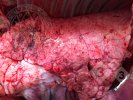

Genomics as the key to unlocking ASF virus circulation
Inside the genome of the African swine fever virus: a giant that is difficult to decipher. CEREP uses genomics to study the virus's circulation in Italy and beyond.


The pig sector events all around the world

Weekly newsletter with all the pig333.com updates
Swine industry news in your email
Pig health: news and articles on PRRS, PCV2, biosecurity, etc, Pig disease guide, atlas of pathology, clinical cases…

Biocheck.UGent is an independent, risk-based, scientific scoring system for assessing the quality of your on-farm biosecurity.

A visual and practical step-by-step guide on how to perform a necropsy on a pig.

All the information about ASF: how to recognize the disease, how it is transmitted, pictures of lesions, latest news, guides, etc.

All the information on Foot and Mouth Disease in pigs: how to recognize the disease, how it is transmitted, images of lesions, latest news, guides,...

Description of the most important diseases and conditions in pigs

Images of major swine diseases

Pig disease diagnostic tool

Definition for the most commonly used pig terms

Simulator that calculates the amount of drug to add to the water when using a flow dispenser.
Weekly newsletter with all the pig333.com updates
Pig Prices by countries. Pork production and trade. News of the pig market and the raw materials

The latest slaughter pig prices in the most important pig markets. Check the evolution of the historical prices in charts and in several currencies.

Latest quotations for the main commodities used in pig feed. Historical graphs with the pig price and estimated feed price.

Figures & trends in pig numbers, pork production and pork trade.

Global production and trade data for the most important raw materials
Weekly newsletter with all the pig333.com updates
Articles on nutrition and pig feeding, characteristics of raw materials and additives for pig feed. Prices of raw materials
Latest quotations for the main commodities used in pig feed. Historical graphs with the pig price and estimated feed price.

Technical sheets of the main raw materials and additives used in swine feed. They include a comparison of nutritional values from various sources, product
Global production and trade data for the most important raw materials
Definition for the most commonly used pig terms

Use this tool to diagnose problems with the feed conversion ratio. Click on the flowchart or on the buttons within the text to navigate through the different parts of the tool.
A biweekly newsletter with the latest developments in swine nutrition
Articles on genetics and pig reproduction: genetic improvement, genomics, artificial insemination, use of hormones

Compare production data, calculate the number of sow, nursery, and finishing spaces, and visualize your tasks on the work schedule by type of BMS.

Tool that allows you to calculate the replacement rate in your farm
Definition for the most commonly used pig terms

Use this tool to find out why your farrowing rate is less than ideal. Click on the flowchart or on the buttons found within the text to navigate through the different parts of the tool.
Weekly newsletter with all the pig333.com updates
Management, pig farm management, work planning in each production stage: management in gestation, grow finish, batch farrowing
Compare production data, calculate the number of sow, nursery, and finishing spaces, and visualize your tasks on the work schedule by type of BMS.
Tool that allows you to calculate the replacement rate in your farm
Definition for the most commonly used pig terms
Weekly newsletter with all the pig333.com updates
Design of facilities and equipment for pig farms: building design, climate control, feeding systems, etc.
Biocheck.UGent is an independent, risk-based, scientific scoring system for assessing the quality of your on-farm biosecurity.
Environmental Footprint Calculator along the pork value chain.
Definition for the most commonly used pig terms
Simulator that calculates the amount of drug to add to the water when using a flow dispenser.

Use this tool to explore which slurry management strategy best fits your situation. Click on the flow chart or on the buttons within the text to navigate through the different parts of the tool.
Weekly newsletter with all the pig333.com updates
African swine fever is one of the most important viral diseases in pigs. It is a systemic disease and is notifiable on most countries.
African swine fever is caused by an Asfivirus. There are different strains with different virulence. Its clinical condition is quite similar to that of classical swine fever and many common diseases, such as salmonella, therefore a laboratory diagnosis is required. Its control involves the stamping-out. As with classical swine fever, these viruses survive for a long time in frozen carcasses.
Lactating piglets
Sows
Nursery and fattening
Pork exports to China increased during 2019-20. China represented 45% of global pork imports in 2020.
This virus was first detected in Kenya more than 100 years ago, hence its name. Since then, it has spread to numerous Asian and European countries, and has even reached island nations such as Haiti and the Dominican Republic. In the case of Spain, the possible origin of the virus is being studied, but it could have come from any of the many affected countries.
No. Swine influenza and ASF are different diseases caused by different viruses and have completely different symptoms and consequences.
Infected animals shed large quantities of the virus in feces, blood, saliva, etc. The ASF virus is very resistant and can survive in the environment for a long time and be unintentionally transported by vehicle wheels, bicycles, footwear, pets, etc., to areas where the virus was not present, thus increasing the number of wild boars that could become infected, sick, and die, and increasing the risk of the virus reaching pig farms.
There are several reasons. Although controls exist at airports, ports, etc., it is impossible to guarantee that there are no illegal entries of meat products from countries affected by diseases that do not exist in Spain. Many pathogens can survive in these meat products for long periods of time and cause serious illnesses if wild boars have access to them.
If the animals become accustomed to being fed by humans or having access to garbage, they frequent inhabited areas more often, creating greater conflict with the population (for example, traffic accidents). Access to constant food sources such as garbage or food provided by humans can encourage wild boars to reproduce beyond the capacity of the local ecosystem, making them dependent on these food sources that are outside of their natural diet, which makes them highly vulnerable.
It is very important that animals potentially infected with this virus do not leave their usual area so that they do not spread the virus to another area and infect a larger number of wild boars. Therefore, in this higher-risk area, any activity that could frighten them and cause them to leave their usual area is being banned. Furthermore, vehicles themselves, hunters, and their dogs could also help spread the virus through contact. Hunting and forestry work are prohibited, and public access to the area is restricted.
Cat food is very appealing to wild boars. If it is regularly placed in specific areas they can access, the animals easily become accustomed to this appealing food source.
African swine fever is a virus that has no treatment or vaccine and can cause up to 100% mortality in infected wild boars and/or pigs. While it does not affect humans through contact or meat consumption, the spread of the virus would cause high mortality among wild boars and domestic pigs, resulting in enormous economic losses in the swine industry, largely due to export restrictions.
Inside the genome of the African swine fever virus: a giant that is difficult to decipher. CEREP uses genomics to study the virus's circulation in Italy and beyond.
We answer frequently asked questions from the public regarding the recent measures implemented to control the outbreak of African swine fever detected in wild boars in Barcelona, Spain.
Almost four years after the first case of African swine fever was detected in Italy, the epidemic continues to pose a complex challenge for the country's health and wildlife management. Since January 2022, the virus has appeared in four distinct geographical areas. These were independent introductions of certain anthropogenic origin, occurring at different times and environmental contexts.
Considering the spread of African swine fever (ASF) globally in recent years, are we prepared for this increased risk?
ASF has never spread so widely across the globe. The question is not if it will arrive, but when. The latest outbreaks detected in Europe may provide valuable information as the wolf lurks.
The pig price in Spain is well above the rest of the European countries. The reality is that this price is only possible at the expense of negative margins in the slaughterhouses.
World Organisation for Animal Health (WOAH) (2026) – WAHIS periodical extraction of early warning outbreak data. Retrieved on 11/3/2026. Data extracted by 333 Corporate 1998, SL. WOAH bears no responsibility for the integrity or accuracy of the data contained herein, not limited to: any deletion, manipulation, or reformatting of data that may have occurred beyond its control.
USEFUL INFORMATION
 University of Minnesota - ASF diagnostics - Jerry Torrison and Stephanie Rossow
 Travel responsibly to avoid carrying ASF virus
Preparing for ASF / Risk Analysis - Topic 1: Foundations (IICA)
 ASF in wild boar: ecology and biosecurity
FAO - Carcass management for small- and medium-scale livestock farms
FAO - ASF in wild boar ecology and biosecurity
FAO - ASF epidemiology and geographic information systems
Pictures, clinical signs and pathological findings. EU Reference Laboratory for ASF
ASF, a threat to the US Pork Industry (National Pork Board)
Laboratory protocols and algorithms for ASF virus
 Outbreak Costing Tool (OutCosT)
 Indicative map of EU ASF regionalisation - Interactive
Graphic material (posters) from the OIE
A guide to the pathological diagnosis of ASF