

Access to drinking water and feed to improve welfare
This second article from the WelfarePIGnet project describes practices for improving pig access to feed and drinking water, including the costs of implementing them.


The pig sector events all around the world

Weekly newsletter with all the pig333.com updates
Swine industry news in your email
Pig health: news and articles on PRRS, PCV2, biosecurity, etc, Pig disease guide, atlas of pathology, clinical cases…

Biocheck.UGent is an independent, risk-based, scientific scoring system for assessing the quality of your on-farm biosecurity.

A visual and practical step-by-step guide on how to perform a necropsy on a pig.

All the information about ASF: how to recognize the disease, how it is transmitted, pictures of lesions, latest news, guides, etc.

All the information on Foot and Mouth Disease in pigs: how to recognize the disease, how it is transmitted, images of lesions, latest news, guides,...

Description of the most important diseases and conditions in pigs

Images of major swine diseases

Pig disease diagnostic tool

Definition for the most commonly used pig terms

Simulator that calculates the amount of drug to add to the water when using a flow dispenser.
Weekly newsletter with all the pig333.com updates
Pig Prices by countries. Pork production and trade. News of the pig market and the raw materials

The latest slaughter pig prices in the most important pig markets. Check the evolution of the historical prices in charts and in several currencies.

Latest quotations for the main commodities used in pig feed. Historical graphs with the pig price and estimated feed price.

Figures & trends in pig numbers, pork production and pork trade.

Global production and trade data for the most important raw materials
Weekly newsletter with all the pig333.com updates
Articles on nutrition and pig feeding, characteristics of raw materials and additives for pig feed. Prices of raw materials
Latest quotations for the main commodities used in pig feed. Historical graphs with the pig price and estimated feed price.

Technical sheets of the main raw materials and additives used in swine feed. They include a comparison of nutritional values from various sources, product
Global production and trade data for the most important raw materials
Definition for the most commonly used pig terms

Use this tool to diagnose problems with the feed conversion ratio. Click on the flowchart or on the buttons within the text to navigate through the different parts of the tool.
A biweekly newsletter with the latest developments in swine nutrition
Articles on genetics and pig reproduction: genetic improvement, genomics, artificial insemination, use of hormones

Compare production data, calculate the number of sow, nursery, and finishing spaces, and visualize your tasks on the work schedule by type of BMS.

Tool that allows you to calculate the replacement rate in your farm
Definition for the most commonly used pig terms

Use this tool to find out why your farrowing rate is less than ideal. Click on the flowchart or on the buttons found within the text to navigate through the different parts of the tool.
Weekly newsletter with all the pig333.com updates
Management, pig farm management, work planning in each production stage: management in gestation, grow finish, batch farrowing
Compare production data, calculate the number of sow, nursery, and finishing spaces, and visualize your tasks on the work schedule by type of BMS.
Tool that allows you to calculate the replacement rate in your farm
Definition for the most commonly used pig terms
Weekly newsletter with all the pig333.com updates
Design of facilities and equipment for pig farms: building design, climate control, feeding systems, etc.
Biocheck.UGent is an independent, risk-based, scientific scoring system for assessing the quality of your on-farm biosecurity.
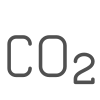
Environmental Footprint Calculator along the pork value chain.
Definition for the most commonly used pig terms
Simulator that calculates the amount of drug to add to the water when using a flow dispenser.

Use this tool to explore which slurry management strategy best fits your situation. Click on the flow chart or on the buttons within the text to navigate through the different parts of the tool.
Weekly newsletter with all the pig333.com updates

This second article from the WelfarePIGnet project describes practices for improving pig access to feed and drinking water, including the costs of implementing them.
Pigs are particularly vulnerable to heat stress due to their limited ability to dissipate body heat and genetic selection for higher productivity, which has reduced their heat tolerance. Improved technical results increase heat production, and today's lines produce 30% more heat than those in the 1980s.
In this installment, we will discover how heat stress affects the digestive tract of pigs.
Chronic inflammation is one of the main challenges in modern pig production, affecting intestinal health, productive performance, and feed efficiency. In light of increasing pressure to reduce antibiotic use, functional nutrition emerges as a key tool.
The good domestic crop contrasts with global uncertainty: currency, geopolitics, and funds continue to drive prices in the short and long term.
Implementing precision feeding through the use of electronic feeders improves sow and piglet performance while providing economic, environmental, and animal welfare benefits.
Digestive diseases in pigs that were previously addressed individually, targeting a single pathogen, now form a digestive disease complex that we must confront from various angles.
One of the major challenges during weaning is post-weaning diarrhea, impacting nearly 25% of piglets in European countries. A promising strategy to boost resilience and help piglets navigate the stress of weaning can be, among others, the use of phytogenics.
Welcome to 333
Connect, share, and interact with the largest community of professionals in the swine industry.
Celebrating 202179Users on 333!
Sign upAlready a member?Users can sign in with Google to personalize the experience, save preferences, or access additional features.

The study confirms the negative impact of both chronic and acute heat stress on feed intake in lactating sows and validates nutritional and management strategies to mitigate it.
Who talks about inflammation? We all might mention it when we exercise too much – aching joints, stiffness – or is it just we are all getting older…? But we do not really talk about inflammation much. And certainly, when we think about our livestock, we do not really mention it at all. Well…we should.
How does heat stress affect our pigs? This four-part question-and-answer series will give us an in-depth understanding of this key aspect of pig production.
Weaning is one of the most difficult periods in a pig’s production cycle. A deeper understanding of the challenges piglets face, as well as the short- and long-term consequences of low feed intake, can help nutritionists formulate their diets to better support growth and improve health.
The market is hyper-reactive, reacting to every piece of news in one direction or another. Let's try to focus on it.
Mammals, such as pigs, have a keen attraction to sweet tastes. They are able to perceive the five basic tastes: umami, sweet, bitter, sour, and salty. Sugars such as sucrose, glucose, and lactose are especially attractive to them. This trait seems to have evolved as a natural mechanism for detecting high-calorie energy sources.
Customs tariffs have major consequences and affect pig farms worldwide.
The use of dietary fiber in sow nutrition is rapidly evolving and is now considered a functional component in nutrition due to its effects on gut functionality, microbiota balance, and the modulation of digestion and metabolism.
Phosphorus is an essential mineral for bone mineralization, energy metabolism, and nucleic acid synthesis. Therefore, strategies to maximize the utilization of phosphorus present in cereals and legumes used in swine nutrition are important, such as the use of phytases. This data sheet describes the structure, types, mechanism of action, and application of phytases.
For pigs to grow and be productive, their nutrition must provide the intake of energy and nutrients necessary for maintenance and production. The most important nutrients are proteins, fats, minerals, and vitamins. Ingested and recycled proteins will be used for tissue growth and repair, enzymatic and hormonal functions, transport of substances, immune responses, water and electrolyte balance, muscle contraction, cell signaling, and pH maintenance.
Although the large influx of news makes it seem otherwise, it really has only been 50 days since the new U.S. President, Donald Trump, was inaugurated.
Of the pillars of commercial pig production, nutritional management, is based on its impact on the total final production cost. In Brazil, it represented 73.16% of the total production cost in 2024 on average, according to data from CIAS (2024, EMBRAPA). In this way, constantly updating the energy and nutrient requirements needed to optimize production outcomes is a focus of attention and a goal of ongoing scientific research.
Uniformity and quality play a key role in the success of both the feed mill and the farm. The quality of swine feed starts with proper diet formulation, which must meet the animal's nutritional needs at every stage of its life, and a proper mixing process ensures uniform nutrient distribution and directly impacts production performance, animal health and welfare, and economic efficiency.
This data sheet presents a brief compilation of scientific studies that have evaluated the effect of formic acid, lactic acid, and propionic acid on pig gastrointestinal health and production performance at different stages of production.
In today's context of high production costs and increasing pressure from environmental regulations, swine production faces the challenge of balancing production efficiency with the environmental and economic sustainability of the industry. A key factor in this equation is feed particle size, where simple actions available to the producer can achieve significant improvements.
At the risk of being proven wrong by the end of 2025, we will try to break down what we think this year has in store. It's not about using a crystal ball, but rather analyzing the data we already have and weighing its importance. At the end of the year, you can compare and see whether we got it right or missed the mark.
Welcome to 333
Connect, share, and interact with the largest community of professionals in the swine industry.
Celebrating 202179Users on 333!
Sign upAlready a member?Users can sign in with Google to personalize the experience, save preferences, or access additional features.
Beta glucans are an excellent bioactive compounds that can help us enhance passive immunity in a profitable and practical way.
This first data sheet on organic acids describes their chemical structure, mechanisms of action, and the main benefits of their use in swine nutrition.
The global swine industry is dynamic and constantly advancing. One of these advancements is the significant increase in sow productivity. This is evidenced by the increase in the number of piglets born and, consequently, in the number of piglets weaned. This progress also poses new challenges, especially regarding the most important superfood on the farm: porcine colostrum. This leads us to ask if improving colostrum quality is possible through specific nutritional strategies.
Beta glucans can boost the vaccinal response, thus helping to achieve an optimal vaccinal response. If they are supplied during enough time to cover the whole vaccination programme this strategy could be an option to improve the vaccine response.
Nutrition plays a major role in the immune response. The interaction of different dietary components with other factors such as environment, health status, and genetics plays an important role in modulating the immune response.
Our experts Sara Mazo and Francisco Ruíz review the economic policies implemented during Trump's first term: protectionism, tariffs, and deregulation of the energy and agricultural sectors.
With current data, we will review the quantitative impact of some of the most relevant factors for sows in the lactation phase.
This year's edition of the Swine Conference in honor of Dr. Allen D. Leman was a special 50th Anniversary event and took place September 21-24 at the Saint Paul RiverCentre Convention Center in Minnesota, USA.