



 0

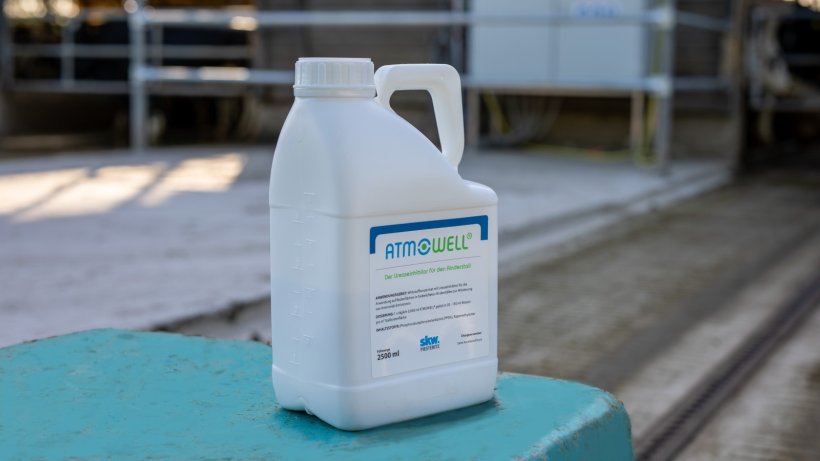
 Efficient emissions management increasingly acts as a catalyst for new, intelligent approaches across all areas of agricultural production. Under the guiding principle ‘SKW Piesteritz – Emissions reduction from the barn to the field’, the company will present a portfolio of solutions at EuroTier 2026 in Hanover that links various aspects of agricultural value creation. The focus is on the ATMOWELL® technology for reducing ammonia emissions in livestock housing, the new PIADIN® neo nitrogen optimiser for organic fertilisers, and the more climate-friendly and emission-optimised nitrogen fertilisers of the alpha line.
“We do not limit emission reduction to a single measure. It is crucial to look at the agricultural system as a whole,” says Antje Bittner, Managing Director of SKW Piesteritz. “With our solutions, we address different stages of the nutrient cycle – in livestock housing, in organic fertilisers and in mineral nitrogen fertilisation. We provide farmers with practical tools that enable them to combine environmental impact with efficient production.”

ATMOWELL®: Ammonia reduction starts in the barn
With ATMOWELL®, SKW Piesteritz has laid the foundations for a technology that tackles the main source of emissions directly in the barn. The urease inhibitor, applied directly to the barn floor, delays the enzymatic conversion of urea and thus reduces ammonia release. The ATMOWELL® technology, which was already honored with the Innovation Award in Silver at EuroTier 2024, verifiably reduces ammonia emissions on solid floors in dairy cow barns by an average of 58 percent. The system can be flexibly integrated into existing and new buildings, offering building planners and farmers a highly efficient way to reliably meet demanding environmental regulations.
>> Premiere: Pilot system installed at a dairy farm
The Timmering-Brandl Milch KG farm is regarded as a landmark precedent for the successful approval of such a system. After reviewing the air pollution control report, prepared by the relevant consultant from the Lower Saxony Chamber of Agriculture, the Osnabrück district authority granted the legally binding building permission for the expansion to 500 cow places at the farm site.
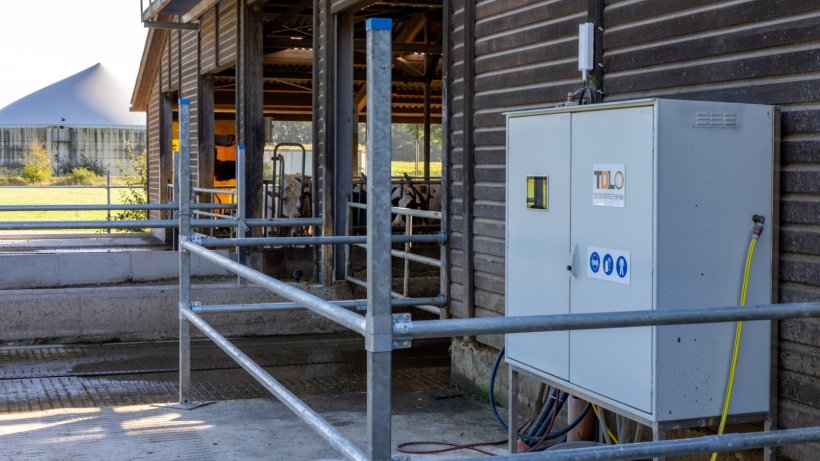
This world’s first ATMOWELL® system at a practical level successfully started regular operation in August 2026. The implementation was achieved through a simple retrofit using a dosing, mixing and filling unit in combination with the proven BETEBE SmartScraper manure removal system. In addition to emission reduction, the decisive factors for choosing the system were its simple structural integration into the existing building and its convincing cost-benefit ratio. Other dairy farms have already obtained building permissions or initiated application procedures via this approach.
>> NEW: Proof of efficacy provided for slatted floors
A recent study on the effect of ATMOWELL® in a dairy barn with a slatted floor, carried out in cooperation with LUFA Nord-West and the Institute for Agricultural Engineering in Kiel, confirms the potential and wide scope of the technology. It shows that the system also works reliably in this construction type, which is predominant in Germany.
“With a proven ammonia reduction rate averaging 27 percent on slatted floors with slurry pits, essential scientifically robust data has been provided for future approval procedures,” explains Dr Bastian Hildebrand, Product Manager for ATMOWELL®. “This opens up completely new opportunities for many dairy farmers in terms of complying with emission reduction targets.”
>> Innovation pipeline: Leap into the pig barn
In the light of the requirements of the revised Technical Instructions on Air Quality Control (TA Luft), SKW Piesteritz is preparing to transfer the principle of urease inhibition to pig fattening, in order to offer farmers a crucial perspective to secure the future of their operations. The fundamental effectiveness has already been conclusively demonstrated in the completed joint project EmiMIn: depending on the housing system, ammonia reduction rates of between 20 and 32 percent were verified. Building on these results, an automated application system is being developed in the current follow-up project IMPROVE, which is also funded at federal level. The corresponding investigations are taking place, amongst other locations, at an experimental farm of the Lower Saxony Chamber of Agriculture, with the goal of achieving readiness for practical use by 2030 at the latest.
PIADIN® neo: A new approach to organic fertilisation
To reduce emissions even more efficiently in organic fertilisation, SKW Piesteritz has reimagined its long-established nitrogen stabiliser technology with PIADIN® neo. Thanks to a formulation optimised for crop production – which has been even better adapted to the challenges of current climate extremes, such as heavy rainfall and periods of drought – nitrate losses can be effectively reduced by up to 50 percent and denitrification losses in the form of nitrous oxide by up to 60 percent. This is active climate protection, as nitrous oxide is almost 300 times more potent as a greenhouse gas than CO2. The complementary use of two nitrification inhibitors via PIADIN® neo enables highly efficient stabilisation. The conversion of nitrogen from the non-leaching ammonium form to the mobile nitrate form is delayed by a factor of 2 to 4. The nitrogen supply from organic fertilisation and the nitrogen requirements of the crops are thus perfectly synchronised. The key advantage – all this is achieved with half the application rate per hectare compared to the previously available PIADIN®, resulting in particular benefits regarding application efficiency, handling, logistics and storage.
“With PIADIN® neo, we are putting an important principle into practice: nitrogen that is already present in the agricultural cycle should be utilised as efficiently as possible by the plant and prevented from leaching into the environment,” explains Dr. Tobias Kirschke, Sales Manager for PIADIN® neo at SKW Piesteritz. “Improved nitrogen efficiency means fewer losses, higher yields, and consequently both environmental and economic benefits for the farm, whilst providing greater flexibility in application periods.”
The alpha product line: Emission reduction right from production
For nitrogen fertilisers of the alpha product line, such as ALZON® alpha neo-N or PIAMON® alpha 33-S, SKW Piesteritz achieves up to a 90 percent lower CO2-e footprint in production through the partial use of biomethane. These premium fertilisers, particularly the ALZON® product, stand out not only for their more climate-friendly production but also for their innovative inhibitors, which reduce climate-damaging nitrous oxide emissions by up to 60 per cent, thereby helping farmers to meet their climate targets.
September 23, 2026 - SKW Piesteritz
